Monday, April 16, 2007

Staying healthy to stay focused

My nose is a torrent, my head is a pressure-cooker and my lymph nodes are a series of warzones.

Maybe it goes without saying, but I haven't gotten much studying in today.

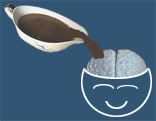
From an experiential point of view, we know that when we over-stress our body -- through studying, physical exertion, emotional tumult, etc. -- our body eventually gives way. In order to get the most from our bodies, say to study for exams, we must treat our bodies with respect.

More and more research is finding that our mental states have a direct or indirect effect on our health. Even thinking about exercise can make you healthier.

On the negative side, stressing over exams can weaken your immune system. I have seen and am currently experiencing illness that comes from mismanaging my stress.

So then what should we be doing to show our bodies the respect they diserve?

R-E-S-P-E-C-T (find out what it means to me)
  • Eating good food regularly.
    • I would like to emphasize the good and the regularly parts. Your body needs clean fuel to run smoothly. So fill up on premium, not macaroni and ketchup... again.
  • Sleep.
    • In Scientific American Mind (Oct 2006), they describe how German neuroendocrinologist Ullrich Wagner demonstrated how sleep promotes insight. (Excerpt in the comments section.) Basically, if you look at a problem, take a little nap, you will have more insight.
  • Stay calm and breathe.
    • We all need oxygen to function, don't forget about breathing. Although a little stress can be helpful to learn, too much and you will block those neural pathways.
  • Keep yourself in check.
    • Every once in a while, just ask yourself: How am I doing? Look at your posture. Check your breathing. Are you tense? Even starting to shake a little bit? Once you realize that you aren't doing so hot, it is time to take a little break. Self-awareness is key.
For the most part, you may know these tips, but it doesn't hurt to get a reminder now and again. And trust me, it is much easier to take preventitive measures to ensure your good health, then to deal with the consequences afterwards.

I'm going to go lie down now; I'm waiting for some night-time Dimetapps to kick in.


If you enjoyed these learning tips and motivational strategies, maybe you'll enjoy the other posts. Please bookmark this page (Ctrl-D) or check out the archive/categories to the right. Better yet, tell a friend! (Click the envelope below this.)

Labels: , , ,

Thursday, March 22, 2007

Finding flow in your work

Yesturday, I had the pleasure of leading a discussion on 'how to live in the present moment' with some lovely ladies at a Goal-Oriented Living Club meeting (you will find this post on the club's website as well). This post covers the some salient points of the discussion (of those that I remembered or wrote down). And for your benefit has been slightly modified in order to make it more web- and reader-friendly.


Happiness is one of those goals for which everyone seeks. I've never yet met the person who does not genuinely want to be happy. However how are we to attain it? Often, it is said that one of the keys to happiness is living in the present moment. In fact, this teaching has roots that spread throughout time and religions. Two examples that are readily forthcoming are Zen Buddhism and Christianity.

The essence of Zen is to gain an appreciation for living moment-to-moment, to understand the "infinite moment". Koans, such as "what is the sound of one hand clapping?", are invoked in order to have one reflect deeply on these questions; this reflection becomes so deep that the meditator becomes fully engrossed in the moment, hopefully to reach enlightenment. More on meditation and Buddhism later.

The Beatitudes from the book of Matthew reveal a similar message:
"So why do you worry about clothing? Consider the lilies of the field, how they grow: they neither toil nor spin; and yet I say to you that even Solomon in all his glory was not arrayed like one of these. [...] Therefore do not worry about tomorrow, for tomorrow will worry about its own things. Sufficient for the day is its own trouble."

Ideally, this sort of contentment would come as easily as breathing, would be as natural as growing; however, most of us are quickly distracted from the now by thoughts of the future and past. Yet surely there must be some way to tap into this power of the present moment.

This is where "flow" comes in.

(This term is not my own, reference available upon request, however it does describe what we will be dealing with for the next bit quite nicely.) Flow is what comes about when you are fully engaged in an activity: one that captures most, if not all, of your attention. Such examples include, playing/listening to music, exercising, doing crosswords, writing, cooking, dancing, meditating, the list goes on. Usually such an activity is enjoyable because it is challenging, while not being frustrating.

In engaging in activities that evoke flow, we hope to get in touch with the same awareness of now that monks engage in while meditating. Though it may not seem like it initially, there are concrete gains to be had from meditaion.

You may recall that there was scientific convention in 2003 where the Dalai Lama advocated (as he still does) the benefits of meditation and scientific inquiry into the same. Of course, research was done as well:

Last year Dr. Richard Davidson, director of the Laboratory for Affective Neuroscience at the University of Wisconsin and a conference presenter, used an fMRI machine to map the brain of monk Matthieu Ricard.

While Ricard, a monk with over 30 years' experience in contemplative practice, engaged in what Buddhists call compassion meditation, Davidson measured the activity in his brain. The pictures showed excessive activity in the left prefrontal cortex (just inside the forehead) of Ricard's brain.

Generally people with happy temperaments exhibit a high ratio of activity in the left prefrontal cortex, an area associated with happiness, joy and enthusiasm. Those who are prone to anxiety, fear and depression exhibit a higher ratio of activity in the right prefrontal cortex.

But the degree to which the left side of Ricard's brain lit up far surpassed 150 other subjects Davidson had measured. No one knows whether Ricard might have exhibited the same results before he became a monk. But given that his readings were off the chart for happiness, Richardson believes that studying the minds of meditating monks can help us learn how meditation can mold our brains to develop happier and less-afflicted temperaments.

(Source: Wired)


What am I getting at here? Our "flow" is one form of meditation that will allow us to access this type of happiness. Flow may allow us to rewire our brains for a higher basal level of happiness.

Before I jump into how we may make use of flow, as a side note I'd like to ask: Do goals push people from this present moment happiness by striving for a non-existent future?

I would say no. Although goals are set for a future point in time, your goals should enrich your present moment. In thinking about them and in the process of accomplishing them, you can more easily practice that flow. In a way, the goals mediate your entry into these present-moment-enriching activities. Further, your thoughts regarding your goals should enrich you right now; goals are not valuable if they only fulfill you once they are accomplished.

As a personal example, one of my goals is to have a beautifully crafted essay to submit to a philosophy magazine here at Queen's University (by March 31). My pleasure will not only come about once I have completed this work, this essay engages me whenever I write or even think about it: this goal enriches my now.

It sounds so appealing for those activities that we do for recreation. Is there a way to get this flow into our work? To put a spin on that: Can we make our flow times more productive?

Definitely!

In the same way that we have found something within engaging activities to flow with, it is possible to find this type of attribute in our work. It is in the framing of the topic, or how we look at it.

Back to my philosophy essay example, some may view the essay as work, something to be dreaded over and to be procrastinated upon. However, the creativity that is allowed to me, the challenge that it brings, does not allow me to think of this essay in a negative light.

In a similar way, we may bring a fresh perspective to our work. It is possible to find something within your math project, history essay, biochemistry textbook, to engage you.

Ah, I can already hear the scoffing even across the vast expanse of the internet. Hold on for a second.

This comes a lot more smoothly once you open your mind to it. So you are asking: "how can I find flow in a subject as boring as biochemistry/history/whatever?" Maybe it will not come from the material itself, but from the process of reading and reviewing. In focusing purely on your text, you are bringing yourself to a different level of awareness. During a different activity, say playing music, try to notice how you feel while in that flow state then bring it to your work. It is something you have to experience to understand.

Another tip to help you get into this flow state (with work or with anything): Remember that all work you do is productive. Don't worry about doing a perfect job right away.

Initially, do what you want, when you can, how you can. Don't worry about not completing enough or every little thing. In thinking about all these other things you are detracting from the essence of what you are doing, you are losing the flow.

Just get in there. You can work about perfection later. If you have given yourself enough time you can tweak things afterwards: edit the introduction, review a section, practice measures 17-24, etc. And you will have enough time.

Why am I so confident that you will have enough time? Usually you don't have enough time because you delay on starting it. Why do you delay? Generally, because you are worried you will (a) not do a perfect job or (b) you hate it. If you start with small expectations and by doing the parts you like initially, you will start to get into it ("the appetite comes with eating"), and you will do much more than you thought possible, even while enjoying it!

So try it! Seriously. This mentality is tremendously productive and fulfilling. If you have some questions or comments about it, feel free to email me or comment below and we can jive.


(One of the comments that I received before this post was that I didn't elaborate on how one can integrate this flow theory into practice. I tried doing that in this post; yet if you feel that it is still lacking, email me and I'll see what I can do. I find in most posts like these - mine and other's - that showing it's practice is the part that always needs the most elaboration.)


If you enjoyed these learning tips and motivational strategies, maybe you'll enjoy the other posts. Please bookmark this page (Ctrl-D) or check out the archive/categories to the right. Better yet, tell a friend! (Click the envelope below this.)

Labels: , , , ,

Tuesday, January 09, 2007

The Beginnings of Personal Growth

For the longest time, I was always fascinated in how things work and the little intricacies of life's puzzles. That fascination developed into a burning desire to learn and excel in my academic life. I'd read hundreds of books before I turned the age of 6. That continued into my adolescent life right up until the end of high school where my self-motivation and desire to do much of anything peaked and then came crashing down like 747. After that, it took me about 2 years to get back to where I once was, and here I am today.

My theory is that personal growth is rooted in two things: Accountability and Independence

If you want to start to get out of whatever rut you're in, you need to get those two things.

Accountability - what is it, and where can I get some?

What it is:

It is the simple concept of taking. Taking control of your life, taking what belongs to you and taking every and all opportunities available to you. It is taking responsibility for your actions and reaching a level of maturity that accepts and faces the consequences of said actions. A person who doesn't run from negative consequences is a person who is accountable. If you only take the positive and do not take the negative, then you are not accountable, you are a coward.

Gettin' Some:
  • Make a conscious effort to be accountable. Think it. Believe it. Do it.
  • Do not blame others, no matter what. Even if it appears to be some one else's problem and you are affected, you, in almost every circumstance, can do something about it.
    • Ex: Roommate pissing you off? Leave. Talk to the person. Move out.
    • Ex: Not liking school? Stop going. Change Programs. Find something you love.
  • Internalize every aspect of your life. You and only you have the ultimate control on what direction your life heads into.
  • Grow a pair. Face your fears. I believe someone said, there's nothing greater to fear but fear itself.
Independence -

What it is:
It is solitude. Being alone. Being NOT DEPENDENT. Yes, I realize you, me and everyone else understands the definition of independence, but few and far between experience it. True independence is when your reliance on others is minimal or nonexistent.

Gettin' Some:
  • Lose some friends. Face it, some friends you have are useless. Cut them out.
  • Rely on no one. Until you can satisfactory say, "I am happy. I can survive by myself." You should not be dependent on others, especially if you can't even depend on yourself.
  • Do it yourself. Stop seeking help, do it yourself for a change, learn something.
Those are the things a person has to do to truly grow. Obviously, I'm no suggesting blaming yourself for everything, but you should definitely seek your own faults before you seek others. Since you're reading this website, I was presume you've probably experience to some degree accountability or independence, but I challenge you to push it to further boundaries and achieving greater goals.

Personal growth is not like Christianity, you can't pay lip service every Sunday and expect results. You gotta be like a Mormon, go out there, believe it, breathe it, be it, and convert some heathens.


If you enjoyed these learning tips and motivational strategies, maybe you'll enjoy the other posts. Please bookmark this page (Ctrl-D) or check out the archive/categories to the right. Better yet, tell a friend! (Click the envelope below this.)

Labels: , , ,

Monday, September 18, 2006

Your life's direction

Who cares the most about where you end up in life? Whose responsibility is it that you find your direction?

I hope you can see where this is going. Only you have responsibility to find and choose your direction in life. Without getting into philosophy, all the choices you make in life are yours.

So what are you going to do with your life? What's up with your undergraduate degree? It's ok if you don't know what you are going to do right now. Most people don't. Some people think they know, but have just been programmed by society, their parents, infomercials, etc.

It is your responsibility to actively search for what you are interested in. (Re)assess your path, find out if it reflects who you really are. If you can't tell, investigate.

I'll use myself as an example, because I'm always around me.

I am currently on a path to enter medical school. Frankly though, I do not know if this is the right profession for me. For a while, I just bitched to other people about how I didn't know what I was going to do. I was sort of complacent, and useless about it.

As a side note: My friends must be pretty tolerant, because this sort of stuff would annoy me after awhile.

Eventually, I started doing something about it.

The first stage was "soul-searching". I looked at my interests; looked at my beliefs about life; and I even bought a book called "Do what you are" - it assesses your personality type and shows jobs/fields that you may be suited for. If you know me, you can borrow it if you’d like.

That moved me somewhere. I gained a better understanding of myself, but I still wasn't getting what I was looking for. Inspired by Ian Yberra's blog, I found that I needed to find out more about my potential career in order to give it a fair assessment.

The next stage is what I am in now: Researching my options.

I started this by talking to one of the career services’ counselors at Queen's University. She gave me some inspiration to investigate the medical profession further. I've just looked through a book called "So You Want to Be a Brain Surgeon?" And soon I will start contacting some doctors to find out what the profession is truly like.

I'll update you as that progresses, I may even post some interviews.

Frankly, I'm going steal this quote straight from Ian Yberra: It is ok not to know what you want to do, it is not ok not to do anything about it.

If you are like me, which I assume you must be a little true because you are still reading this, you may be confused about your options. Go out there and investigate. I promise people will be nice to you, since you are taking an interest in their lives and treating them like an expert. If they aren't nice, I'll join you in TPing their house.

Get out there and investigate your options! This is your life we are talking about! Go!!


If you enjoyed these learning tips and motivational strategies, maybe you'll enjoy the other posts. Please bookmark this page (Ctrl-D) or check out the archive/categories to the right. Better yet, tell a friend! (Click the envelope below this.)

Labels: , , ,

Friday, September 01, 2006

Experiments in learning that don’t explode

As people make the transition from high school to university they find that many aspects of their lives and mindsets change. A newly discovered freedom – or at least awareness – causes people to reassess what they know to be true or good.

Naturally, this leads to a lot of experimentation. In university such experiments may involve alcohol, drugs, sexuality, social interaction, physical activity and much, much more.

While I will neither condone nor oppose these types of experimentation, I think that people must come into their own perspective in their own way. Might I suggest one more – oft overlooked – area of experimentation? The way you learn.

This is the perfect time to experiment with your learning. Right now, we are still relatively young. Even if you are not, there is a comparatively small time investment needed in order to improve the way you learn. Think about it: if you spent one year trying out new learning techniques – honing in on what suits you the best – then even if you only live ten more years (definitely more though), you will have ten more years of improved learning. Relating this back to Monday’s post, it would be a very solid investment.

In finding out the nature of the way you gain knowledge you can increase the speed and ease of your learning. Taking in information will become less of a chore and more of an incidental process – or better yet, it will become fun.

I would recommend reflecting on all the areas and ways in which you learn. However, to get the ball rolling, I’ll give you some examples:

In-class note taking

How do you take notes in class? Do you write down everything? A lot of professors tell me not to, but then it seems like I’m missing something from my notes when I come back to them. There’s a line between expediency and deficiency. Work to find what works or what doesn’t work for you.

As well, have you ever tried previewing the material before class or reviewing afterwards? I must say it’s really helpful. Even if you don’t fully grasp the material at the time, you’ll find that even the mention of something vaguely familiar during the lecture will boost your confidence and increase your attention span.

I have already written a post describing Note Taking Tips (in class).

Listening to music
I’ve heard many arguments from both sides, so I’m hesitant to render a verdict for either. I’ll give you what I know, and what works for me.

Some people say that studying with music allows them to keep focused longer and keep a nice tempo going to their work. Some people say it energizes them. There was even a system, popular in the mid-1980s, called Super Learning [new window] that taught that people learned best while listening to 60 beat-per-minute Baroque music.

On the other hand, personally I’ve found music to be too distracting. I always want to start singing along, drumming things, etc. I’ve had a few teachers say that music can be distracting, but I usually take their advice with a grain of salt. A while ago, my friend mentioned a study done where participants learned some material with and without music. The variable was the level of musical competence of the subjects. Can you guess who learned better with or without music?

Well, I guessed wrong. Actually, the people with a higher level of musical competence actually learned more poorly when they listened to music. This makes sense, because their brain would become more active in the “musical areas” of the brain; taking focus away from the studied material. (I believe Jenna told me this, so if you are reading this and I have misquoted you or the study, go ahead and correct me.)

However, I have to mention that I have been listening to music on an off while writing this post…

Study Groups

I don’t know if I’ve mentioned this already. Many people find that study groups help them by bringing people together to teach and learn the material. I find that teaching others helps to solidify the material in my mind. When you actually have to explain something, you have to have a higher and more complex level of knowledge about the subject. Personally, I don’t like study groups because I’ve found that we get too easily distracted and start talking about the Nintendo Wii or shoes. Try it out for yourself!

And more!

I have written other posts regarding the following things you should try experimenting with:
  • Memorization techniques – This is probably one of the most valuable techniques you will learn.
  • Environment – You may want to incorporate things that help you learn, calm you or provide motivation.
By the way, you should also try to expand this philosophy to other aspects of your life. A change in diet can change your energy levels and even the way you think. An occasional reassessment of your personal beliefs can also bring about lasting positive change in your life.

Keep your experimentation positive and you can’t go wrong. Without change there cannot be growth; growth is the key to life. So get growing!


If you enjoyed these learning tips and motivational strategies, maybe you'll enjoy the other posts. Please bookmark this page (Ctrl-D) or check out the archive/categories to the right. Better yet, tell a friend! (Click the envelope below this.)

Labels: , , , , , ,

Tuesday, June 13, 2006

Finding and Keeping your Motivation

I have to start by apologizing for my long hiatus. Frankly, I have not been placing this site very high on my priorities list for many reasons: MCAT preparation, going to the gym, learning guitar, chillin', etc. From now on, my posting will be much more frequent and regular as I am placing it much higher on my "to do" list.


What is the number one quality you can improve in order to perform better? Well, if you read the title you’ll know what I’m going to say: Motivation.

I find – and I know many of you are the same – that continuing to work can be very difficult. However, once you are working, you can get into a flow that feels fantastic. Ay, here’s the rub: If we can’t get started in the first place, how can we get into that flow?

The trick is to find out how you think and use that knowledge to find what will drive you.
Allow me to clarify with a little question. Assuming that you don’t adore cleaning your room, which of the following would motivate you to clean it:
a) The fear that I will come over to your house and kick your gonads (testicles/ovaries) into oblivion.
b) The incentive of 100 dollars for your efforts.

While you may prefer one to another (which you should keep in mind), I will assume both will put a spark in you. We can use this to our advantage.

These basically fall in two categories: toward and away from. (This is an idea from Neurolinguistic Programming, NLP.) While I am a big proponent of positive thinking, ignoring your specific idiosyncrasies (tendencies) and problems is not realistic.

Acknowledging this, in motivating yourself you can start with an away from motivator, then quickly follow it with a toward motivator.

I will use myself and studying for the MCAT (basically, a medical college entrance test) as an example. I find the idea of my not being accepted into any medical school to be quite frightening. As well, the idea that my peers will decisively out score me also makes me uncomfortable (as petty as that is). Since I want to move away from these outcomes, I am motivated to study.

The idea of getting a freakishly high score is very gratifying and will give me a tremendous sense of accomplishment afterwards. This outcome pulls me towards studying hard for this test.

So when I talk to myself to get/keep myself going (as I frequently do), I say something like, "It is time to study. I will not stand for rejection from any medical schools. I can see myself reaching astronomical new heights in MCAT scores."

While this may be a little much (which is good), you get the point.

Once you have sufficiently motivated yourself, it is important to start working right away while you have the energy. Constantly engage in this kinetic self-talk, it will work wonders.

So get to it! Find which one works better for you (toward or away from motivators) and then use both to their fullest. Block off that time to work hard. No interruptions! (Move if you have to) And work, work, work! Once you reach the end, you’ll be glad your newly found motivation kicked in at the perfect time.

Happy studying!


If you enjoyed these learning tips and motivational strategies, maybe you'll enjoy the other posts. Please bookmark this page (Ctrl-D) or check out the archive/categories to the right. Better yet, tell a friend! (Click the envelope below this.)

Labels: , , , ,

Tuesday, May 23, 2006

Barriers to Achievement

Wow, I haven't posted in quite sometime. I'm really sorry. I've been getting bogged down in MCAT preparation, Victoria Weekend goodness and a bunch of other silliness I won't get into.

Frankly, this isn't even a super-real update, as I will be linking to one of my favourite articles - rather than actually writing my own content. I will try to think of one soon. I have a feeling my next MCAT (Kaplan) Class will provide me with some inspiration.

Ramit Sethi of IWillTeachYouToBeRich.com wrote an article about overcoming mental and physical barriers in order to accomplish what we want. I still read this article every once in a while (I printed it out) in order to keep me going. I think we all need a shot of motivation and inspiration at times. I find that surrounding yourself with positive energy/people/content, is the only way to do this.

So go for it and read that article!


If you enjoyed these learning tips and motivational strategies, maybe you'll enjoy the other posts. Please bookmark this page (Ctrl-D) or check out the archive/categories to the right. Better yet, tell a friend! (Click the envelope below this.)

Labels: ,

Tuesday, May 09, 2006

Tips for Students from Steve Pavlina

A couple weeks ago I emailed Steve Pavlina about posting an article about tips for college students. I'd like to say he created one just because I emailed him, but he said that it was already on his "to write" list.

His 10 Tips for College Students post tackles general and specific techniques to improve your university/college experience. The most important and first mentioned one being purpose. This is the area that I believe most people struggle with -- myself included.

We would all perform better in finding our purpose for attaining a higher education. This summer I am tackling this problem head on, and I recommend the same for you as well.

His specific time-management and memory techniques are also very interesting and useful. I have actually created a post about pegging - a very useful memory technique that he mentions - and I really love the picture I included with it.

I will try to implement many of his techniques this summer as I am taking an MCAT course and I'll tell you how it goes.

So have at it: 10 Tips for College Students - it's worth the read.


If you enjoyed this post, maybe you'll enjoy the others. Please bookmark this page (Ctrl-D) or check out the archive/categories to the right. Better yet, tell a friend!

Labels: , , ,

Tuesday, April 25, 2006

Synchronicity and Your Future

Recently, I've been pondering what sort of route I should take with my education and eventually career. For me, this sort of thinking is always rooted in preconceptions about what I should do based on what my parents think, what job makes money, etc. There are always problems that seem to arise when this topic comes up.

Through some funny coincidences this topic has come up 4 times in 30 minutes in my life. Maybe someone is trying to tell me that this is an important issue that needs resolving.

An article from Steve Pavlina called "To Thine Own Self Be True" gives us another approach to help us decide what we will do with our lives. As with most of his articles, his methods are radically different; however, the radical views are the ones that change our lives.

I was already beginning to feel what he mentions in his article - having a career that caters to your talents and personality, rather than the other way around - but I couldn't fully internalize it until reading this.

So once again, "To Thine Own Self Be True" the words of Shakespeare and Pavlina ring ever true. It is well worth the read.


If you enjoyed this post, maybe you'll enjoy the others. Please bookmark this page (Ctrl-D) or check out the archive/categories to the right. Better yet, tell a friend!

Labels: , ,

Sunday, April 23, 2006

Graciousness

Sometimes we all feel down. "Man, I’m so tired of studying. Why am I doing this anyways?"

I was having one of those moments while lying in my bed after finishing a lecture set. Then I remembered a story I heard from a professor (Dr. Dean Tripp) at my university. I don't remember the details – I'm sure someone will correct me somewhere, like in the comments section – but I’ll give you what I remember.

There was a promising young man in high school, definitely bound for university and greater things. After enrolling, his long-time girlfriend got pregnant. He did what he had to and dropped out to take a crappy job and support his new family.

I don’t remember how long of a period there was in between, but eventually things got a little more stable. This young man wanted a university education. He more than wanted it, he craved it.

However, there were some problems: He hadn't been enrolled in school for so long. No university would take him. This did not stop him.

He went to the administration office everyday, and just stayed there. He politely greeted the admissions officer, but not did not go anywhere. After a long period of this, the woman (officer) finally gave in. She let him enter on a probationary basis with a smaller course load; if he slipped up, he was toast.

Well of course he excelled, he was so driven. He eventually went on to receive his Bachelor of Sciences, then a Masters and eventually a PhD. That man went on to teach at Queen’s University and give many lectures. All of this while developing quite a student fan base.

That man was Dean Tripp.

Whoa, I’ll let that sink in.

So, I'm thinking to myself: Self, what would you have done if you didn't get into university? Well, I would probably have to work. But I know I wouldn't be content there. As much as exams can get me down sometimes, I still love learning. Acquiring new knowledge drives me.

If I had a choice between university or not, I would very quickly choose university. But what if it meant working hard? What if it meant some unpleasant courses? Would it be worth it?

Hell yes. A thousand times over, yes. I am extremely grateful that I am in a nice university with nice (and attractive) people. I am glad the content is challenging. If it was easy to the point of boredom, then I wouldn’t even be learning.

We should realize how lucky we all are. Even if you aren’t in university, look at what you do have. Like most of my posts, this goes much farther than the small world of academia.

I thought I lost my wallet today. So as I was walking back to the cafeteria through the rain, after walking halfway home (I was soaked), I started thinking to myself. At least I have a wallet to lose. I'm not even that screwed if I don't find it. And I have a jacket on (no hat though). No one has even tried to punch me in the groin. Things are pretty good.

Well, my wallet was lying on the ground in the cafeteria, right where I was sitting earlier. Everything was still in there.

Gratefulness: It can be hard to remember, especially in the hard times; however, if you had to choose again would you choose differently? I wouldn't.

If you would, maybe it’s time to change now; but that's for another post.

Excuse me, but I have to make the most of my choice to go to university.

Thank goodness.


If you enjoyed this post, maybe you'll enjoy the others. Please bookmark this page (Ctrl-D) or check out the archive/categories to the right. Better yet, tell a friend!

Labels: , ,

Thursday, April 13, 2006

Taking back control

More and more, I’ve been noticing that people refuse to take responsibility for their actions. People aren’t willing to admit when a mistake is their fault. People don’t like the idea that we are the only ones in control of our future.

Someone might be performing poorly in school, so they might say:
  • "My parents didn’t push me hard enough."
  • "This professor sucks."
  • "My friends won’t help me."
  • "My underwear is too tight."
Well, I don’t really know what to say about that last one, other than ‘buy another pair’. For the other excuses though, while they can be true, they are usually just ways of shifting the blame away from themselves.

If we continuously externalize the burden of learning – pushing the onus on our parents, friends or even inanimate objects – then self-development is impossible. We won’t feel compelled to grow because the factors controlling personal growth are always out of our hands.

Well after all this negative talk, does this mean there is no hope? Of course not.

The solution: Take back control of your life.

Once we realize that we are in charge of our lives, we become empowered to create sweeping changes. This is a pretty important point, so I’m going to elaborate a bit, just to drive it home.

Your success or failure in anything really only hinges on one factor: You. Your drive and dedication, your attitudes, your knowledge – all of it, stems from you.

It doesn’t really matter what your dad says, or what your friend thinks or what your grade 3 teacher wrote in the comments box. When it comes down to it, it is just you and your thoughts before you go to sleep. Well, there may be someone else with you, but that’s none of my business.

Once again, when we take back control of our lives and take responsibility for shaping our future, we can break free from limited thinking and affect drastic changes.

For example: You are hesitant to begin reading your text. You cite a number of people who have distracted you, causing you to lose focus, leaving you with little time to read the text. How dare those people force you to talk to them?

Aaah! This is garbage. You start to realize that you are allowing yourself to be distracted. Once you realize only you can change this, you move to the library (without your computer, come on) and finish your readings in record time.

This sort of process can only happen went accountability lies with a specific person. Can you guess with whom? Yes, you. *gives a cookie*

I have to point out, that this sort of responsibility-shifting is actually quite insidious, because most of the time, people don’t even realize that they are doing it. I’m not one to name names or point fingers, so I recommend we all do a little introspection to see if we can catch ourselves doing it.

While shifting responsibility away from ourselves may make things easier in the short term, in the long run, it only robs you of your potential. So take your life back!


If you enjoyed this post, maybe you'll enjoy the others. Please bookmark this page (Ctrl-D) or check out the archive/categories to the right. Better yet, tell a friend!

Labels: , , , ,

Sunday, April 09, 2006

Quiz Yourself First

So you read that chapter from your textbook a few times. You seemed to have a strong grasp on the material. Then the test rolls around and… that whole chapter is a blur. You remember some major concepts, that picture at the beginning of the chapter (yet another molecule – real creative…) and maybe you remember question 17.3 – but it wasn’t even that hard.

This is not what you were expecting. Sucks doesn’t it?

How can we prevent such disasters from occurring?

Preparation. And lots of it.

It isn’t enough to merely read the text a few times, and expect to do well. How will you know if you are absorbing the material? This is where problem-based learning comes in. In this case, problem-based learning encompasses asking yourself some questions about the material.

In questioning yourself on the material, you are forcing your brain to go into the retrieval mode that is oh-so-necessary for any test.

Problem-based learning can help you in another way. One of the keys to learning is to have multiple mental pathways that can lead you to the same set of facts.

For example: Let’s say that you are trying to remember how Hamlet’s father was killed.
  1. The first thing you remember is that he was murdered while sleeping; because you know that Claudius is a rank man-whore. Oh, he was killed in some weird way, no knives or anything like that… something with poison… poison in the ear! Claudius poured poison into Hamlet’s father’s ear!
  2. Or, you could have only remembered ‘ears’ and eventually reached ‘poison in the ear’ through another pathway.
Where am I going with this? Questioning yourself (especially from different tacks/approaches) helps to create these mental pathways. The more you create, the greater chance you have of landing on at least one of them on a test.

So to get on the problem-based learning train, you will have to get some questions to ask yourself, or have others quiz you. Ask around, usually people would like this opportunity as well.

Now when asking questions, you have to be real with yourself. Include all material that might show up, even if it is difficult. It is better to get a question wrong in your room seven times, than to lose those marks on a test.

I may have mentioned that I love giving myself questions to learn. If possible, I prefer to incorporate them into broad concepts. It is easier to learn one large idea and its subtopics rather than a bunch of disjointed concepts.

I’ll give you an example of a question I’ve asked myself to study for anatomy (apologies if it flies over your head, I’ll do my best to translate):
How do the epithelial cells (cells lining a space) change along the urethra as we move distally (from the bladder to the external opening)? And relate these changes to functional changes.

(That question sounds a lot harder than it is.) With that question, I am forcing myself to recall the varieties of epithelium along the urethra, while also relating that variation to the change in function.

I do this so that when I have to recall this information later, the potential for numerous mental pathways is large, because the remembered concept is itself large. This increases the likelihood that I will remember the information more readily on a test.

If you are wondering what process you should go through to learn in this manner, it is fairly simple:
  • Quickly scan over a small section – i.e. a lecture or one chapter.
  • Go through the lecture/chapter again and write questions that will extract the answers in the text from you.
    • You may want to put the answers afterwards – it takes more time, but it is easier to retrieve the answer if you are stumped.
  • Read the information again.
  • Try to answer the questions.
  • Find out what you don’t know.
  • Do something else (e.g. the next lecture set, jump in some puddles, eat a 72oz. steak, etc.)
  • Try answering the questions again.
Generally speaking, I try to ask myself the questions until I run out of time, or I know the information so well that I barely even need the question sheet. In this way, I ensure that I know pretty much everything for the test.

With this technique, you will find that you can recall information more readily by creating new mental pathways and putting your brain in retrieval mode. So go and ask yourself some questions! Seriously, ask!


If you enjoyed this post, maybe you'll enjoy the others. Please bookmark this page (Ctrl-D) or check out the archive/categories to the right. Better yet, tell a friend!

Labels: , , ,

Monday, April 03, 2006

Open your mind

This is probably the greatest tip I will ever give – not just regarding learning but life in general.

In everything that you do, try to keep an open mind. Do not be so quick to judge.


Some of you may be wondering how this can relate to education at all. Have you found that you have a professor that you just don’t take a liking to, for whatever reason? And from then on, everything that professor says doesn’t even count. Your attention span falls and suddenly shiny things become a lot more interesting. This isn’t hurting them, it’s hurting you. We have to open our minds to different possibilities. We have to realize that maybe this person wasn’t birthed from Satan’s loins. They could have had a very hard life

If you are anything like me, you find that a certain subject (or several) have become anathema to you. Sometimes you find that you hate this subject so much that it is actually causing you to develop a twitch. Upon further reflection, we have to consider the possibility that this material is not that bad. Maybe there is a reason that you are learning it. There is always some interesting material to be found within the course. However, this can only happen if you allow yourself to find it.

Once we are mired in our negative preconceptions about a professor or course, how can we hope to learn anything effectively? So we are basically giving away a huge portion of our marks. For what? Our silly pride and rash decision-making. All that time and effort is being used inefficiently because of our petty conflicts. This is really not worth it.

So then, the question is: How can we resolve this problem? How can we get over our seemingly unwavering contempt, and start learning again?

The answer, like many things in life, lies within us. First we must establish what it is that is preventing us from being receptive. Do you dislike the professor? Why? Do you actually find the material uninteresting, or is just the way it is being presented? In some cases (mine), it is simply that the material is being taught in an unfamiliar way – making it much more difficult to absorb. Even in the case of identifying problems, we must open our minds to all possibilities.

As a side note, I find that I become very quickly agitated when I don’t understand what is being taught at all or if the person is presenting it in a queer way. I thing that you know the feeling I’m talking about.

It is these sorts of feelings that can distract from the real origin of the “barrier”. Initially it may seem that the professor’s beard is too long and distracting or their accent is too thick. These might be small problems but they are not the true sources of the barrier. Thus, we must be careful when assessing the problem, and once again: Keep our minds open.

Once we have identified the problem, we have to work towards a realistic solution. If the material is being taught in a weird way, then something must be done to improve comprehension. Possibly previewing the material will help, maybe more time needs to be spent on this subject.

After that all you can do is continue to work dedicatedly. A lot of people won’t like hearing that, but this is the way things are.

As well, I wanted to mention that there are many more applications of this to learning and life in general, without making this a 2000 word post, I’ll briefly address them.

Even in the knowledge we have already acquired, we have to remember that we are not always right. It is possible that we haven’t learned a concept completely, or that we learned it improperly. So if someone comes along and challenges your knowledge, do not simply ignore this person because “they must be wrong”. Instead, investigate further to see if there is some merit to their point. Then change your brain accordingly.

After reading that paragraph again, I see how that can apply quite nicely to learning and life.

Further, we must keep our minds open to new ideas. Maybe the way we perceive the world could use a tune-up. Maybe we don’t know the best learning technique. Maybe we don’t know everything.

Maybe if we keep our minds open and stay receptive, we can learn more about the world and ourselves.

On a more interpersonal level, please do not be so quick to judge people. I find that people (including myself, even 5 minutes ago) are too quick to assume the worst about others. This can only result in trouble.

Once we have a negative image of a person in our mind’s eye, we react to that image accordingly. We start treating that person poorly; they react to that as expected. This begins to breed poor relationships with those around us.

Maybe if we were to assume better of everyone, or at the very least reserve judgement for much later, then all of our relations would be good ones. And that sounds like a pretty sweet deal to me.

So think about it, look how much we can get just from keeping an open mind: elimination of silly learning barriers, a new understanding of ourselves and the world, better relationships with others… and that’s just what I could fit into this post (which is already way too long).

All of this, for the low, low price of 3 payments of $14.99 $0.00. What an amazing bargain!

Call now, operators are standing by.


If you enjoyed this post, maybe you'll enjoy the others. Please bookmark this page (Crtl-D) or check out the archive/categories to the right. Better yet, tell a friend!

Labels: , , , ,

Tuesday, March 28, 2006

Setting Goals to Achieve More

"How can you expect to hit a target you can’t see?" – Zig Ziglar

When you work do you have a specific, definable goal that you are working for? If you don’t, how can you know if you are getting closer to reaching it? How much material will you have covered by a certain date?

You need to have some goals to get things done, really done.

The advantages to having specific, realistic, dated goals are abundant:

  • They let you see if you are on track or if you need to pick up the pace.
  • They give you focus, allowing you to accomplish specific tasks.
  • They keep you calm by putting your tasks into smaller, manageable bundles. As opposed to looking at a huge list of everything you have to do, freaking out, screaming/crying, eating ice cream, and having nothing accomplished 2 days later.
  • They drive you towards the completion of tasks. You can just look at your goals and you will know what you have to do, which will increase the chance that you will accomplish it. They will remind you to continue to chip away at a goal until it is complete, simply because you want to cross it off your list.

I think you get the point.

To solidify this, I’ll give you some personal examples. I do practice what I preach.

For this site, I told myself: I will have 15 posts by April 2, 2006. I put this sign on my bulletin board, right in front f my chair with a little tally underneath it. I made this goal about a month ago, as I planned to have a new post every 2 days or so. Initially, I was quite ahead of schedule; however, after a series of outings, I fell slightly behind. After looking at my goal, I realized I had some catching up to do and produced a few more posts fairly quickly.

It is important to note that I actually did not post one of them because I didn’t feel it was up to par with the other posts. Don’t work for the sake of working; remember the essence of your goal.

I didn’t want 15 bad posts by April 2, nor did I want 14 good posts and one poor post. I actually meant 15 quality posts. Maybe I should have added that in, but I knew what I meant. As of the time of this post, this will be my 13th “real” post. Which means I’m exactly on pace for reaching my goal.

Switching back to academia: It would be better to say, “I will cover 3 chapters of chemistry well” and do it, rather than covering 5 chapters inadequately. If you were to do that, then what would be the point of all of this?

For a personal academic goal, as I mentioned before, I would like to improve my anatomy practical mark. Now my goal is to get 90% on the final practical exam.

This is a fairly lofty goal from where I stand, but I know how much work it will take to achieve this (in terms of effort and time), so I still think this goal is very achievable. I’ll update you later on how well I have reached my goal.

Do not be afraid to aim higher than usual, to stretch yourself more than normal. You might surprise yourself.

I remember reading a quote in my middle school class a long time ago. “Aim for the moon, because even if you miss you’ll land among the stars.” Even in middle school I thought it was cheesy. I remember also thinking that the person who said that didn’t realize how far away we are from the rest of the stars (I was a bit of a smart-ass). Those points aside, there is a good point in there: Aim far. The worst that can happen is that you learn something and improve.

I know that goal setting can have the same benefits for you as it does for me. Get it done, write down your specific, definable, time-stamped goal. Remember to challenge yourself and work hard at it. With determination, I know you’ll reach your goals.

Labels: , ,

Monday, March 27, 2006

Activity versus Accomplishment

Does the following scenario sound familiar? So you’ve been working for an hour and a half. Your papers are all organized and nicely hole-punched; your textbook is covered in highlighter; your room is super clean; and you printed your notes for the next 3 weeks. But you haven’t learned a thing.

Ouch. A little too close to home? Yeah, same here.

This isn’t to say that those tasks aren’t important, but we shouldn’t fool ourselves. When we are supposed to be studying, we should be working hard on studying. The time for those other tasks can come later, they are not as important.

It would be better to devote a certain period of time to intense working (around 60 to 90 minutes works well for me), rather than attempting to do many tasks at once. Although many people claim to be accomplished multi-taskers, research has shown that attempting to multi-task while performing mentally strenuous work significantly reduces performance. (If you want me to cite this, it will take me a while. I read it in New Scientist a while ago.)

This means that we can study or work more efficiently if we stick to one task at a time. I find that I retain a lot more when concentrating on one subject at a time. Some may think this is really obvious, but it is important to reinforce such an important point.

Activity is only the same as accomplishment when we devote our full attention to something. We must stay real with ourselves, a lot of motion only amounts to something good, if we can say we are one step closer to our goals.

Update: I found an article that is pretty similar to the one I read, but I’m pretty sure the one I read was quite a bit longer:
One at a time (opens in new window)

Labels: , ,

Monday, March 20, 2006

Resolving to Improve Your Weakness

After a disappointing performance in one of my courses, I've decided to redouble my efforts in order to improve.

The course in question was Anatomy, and even after some drastic measures (maybe I'll show you later), I know I could have done better.

After writing the practical midterm, I realized that I placed too much of my focus on the theoretical portion, and I didn't study certain parts that I felt were really boring/complicated. As one would expect, I did quite poorly on the parts that I didn’t study properly for.

This leads me to a lesson I picked up a while ago, but apparently forgot to apply: If there is a subject or topic that you find boring or difficult, you shouldn’t leave it until the end, nor should you spend less time on it as it suits you. You should work on this subject/topic first, and you should work on it the hardest.

If you find a topic boring, it generally means that you won’t do as well as you could. This is due to a lack of a will to learn and the general poor retention that results from chronic apathy. To combat this, you must disproportionately increase your effort in this area to make up for a lack of interest. (By disproportional I mean you'll need more effort to learn the same amount of information because it’s harder to absorb – initially, at least.)

When you start to really intensely study a "less interesting" subject, you'll find that an interesting thing happens: You will actually start enjoying the subject more.

A collective "Gwah?" comes from the masses.

It's true though. Once you begin to learn more, the concepts enter your brain increasingly quickly. You start to feel excited as a once insurmountable mountain becomes a very manageable speed bump. You start making connections within the subject matter, and you start to see how things interrelate. The concepts actually have flow! Maybe the course was taught in this order for a reason. Maybe there is a reason your professor finds the material more interesting than her own apparel, which would explain why she only wears those floral print shirts... bleck.

The main point is that in order to be successful in a topic that isn't your fancy, you will have to put additional focus and resources towards it. It will start getting easier and easier, I swear. But you're going to have to try it to find out. All you have to lose is a disdain for some subject...

Labels: , , ,

Thursday, March 16, 2006

Are you kidding me?

OK, so you are studying for your Biology finals. You have your books open, your notes out, the beats are pumping, 24 is on TV, John and Christy are talking to you on MSN Messenger, and you're sprawled across your couch, that wobbly coffee table and some dusty mugs.

So what are you doing? Oh you say you're "studying"? Lies!!

This reminds me of a book Judge Judy wrote: Don't Pee on My Leg and Tell Me It's Raining. Yes, this is a real book.

I can't believe all these people that think that this is even close to studying. I can't believe that I sometimes think this is studying. There are so many things I want to say about this, I don't even know where to start...

Distractions and Your Learning Curve

I'm sure we've all had this: You start studying and things are going sort of slowly. After a little while, you get into a groove and you are learning really effectively. Some time passes, then you notice your attention is starting to wane, you start to get restless, and you eventually just stop studying. That's basically the learning curve. However, if you are constantly distracted by Jay-Z, Jack Bauer and sweet sweet Christy from Linguistics, you are never going to get to that effective learning stage.

Don't lie to yourself!! If you aren't learning with all these distractions, then do something about it! Turn off those "phat beats", move away from the TV and log off of MSN Messenger (appear offline doesn't count).

I have to point out that some people work quite well with music. You'll have to be your own judge though. And be serious with yourself, if you get more done without music, you probably work better without music. Duh.

MSN Messenger

OK, some people are thinking: "Oh what if someone has to tell me something, I should stay on MSN." No, you shouldn't. a) If they are telling you something over MSN, it probably isn't an emergency. b) You have a phone. c) When's the last time something important was discussed on MSN Messenger? Probably not for a while.

Your Studying Area

I'm not going to go into a spiel about ergonomics or lighting. I will, however, remind you to become aware of your study habits. If you study on your bed and always wake up on top of your chemistry homework wondering why instead of reactions you have only a puddle of drool, then maybe you shouldn't work on your bed.

If there are always suspicious thumping sounds coming from your wall, either tell your housemate and his/her "guest" to shut up, or go to the library.


I'm fully aware that this isn't complicated stuff. Many people might have already thought about this before. Far less have done something about it.

Frankly you could just keep doing the same things you've always been doing, but then you should expect the same results. Don't come crying to me when you get 43%. "But I studied for a whole week! How did I do so craptastically?" Did you study effectively for a whole week? Or did you just study Johnny Depp's bum (with some chemistry interspersed)?

If that sounds really bad or really familiar, it's time for a change.

This is serious stuff. Only you can really change yourself. Only you are responsible for that change.

Once you have come to terms with that, all you can do is succeed.

I hope people don't think I'm saying you shouldn't relax ever. I'm saying when you are studying, study hard. When you relax, just relax.

Labels: , , ,

Wednesday, March 01, 2006

Acknowledge what you don't know

I’ve noticed this phenomenon in many people (including myself): We all say / think that we know something, while in the back of our minds we realize that we don’t have a full grasp on some concept. Yet we still continue like we fully understand. I’ll give an example in a moment.

While this can apply to many facets of our lives, I’m going to show how it can affect our academic learning.

Let’s say I pretend to understand chemistry. “Yeah, there are some molecules. Sometimes they’re together, sometimes they aren’t.” Frankly, that’s total garbage. This is quite a bit of exaggeration, but I hope it looks a little familiar.

We fool ourselves into thinking that we know something, and when test time comes everything falls apart. Do not wait until a test to realize you don’t know something. The only person you are hurting is yourself.

A long time ago I remember learning about the Four Levels of Knowledge*:

1) You don't know that you don't know.
(You don't realize you are ignorant.)

2) You know what you don't know.
(You are aware of your ignorance.)

3) You don't know that you know.
(You are not aware of the knowledge you have.)

4) You know that you know.
(You realize what knowledge you have and how to use it.).

- In the first stage, since you don’t even know that you are lacking knowledge, you can’t even work to fix it.

- In the second stage, the highlight of this article, you are now aware of your ignorance, so you can work to learn what you are missing.

- In the third stage, you are in the process of learning; however, you still are not aware of when to use this knowledge or how extensive it is.

- In the last stage, you have become so proficient in the material that you can use it in many contexts.

The key to extract from this is that you should be aware of how much you know, and work to improve from there. It's ok to not know something, but it's not ok to sit by and do nothing about it.

Once you realize you need to learn something, work towards learning it. I know it can be difficult at times, but you can do it. Trust me.

* I have actually heard this in another way as well, with 3 and 4 switched. If the last stage is “You don’t know what you know”, then you are so proficient with something that you perform it naturally without any real conscious thought. This applies more to skills-based things like judo or piano. I think in academic matters you should always be thinking.

PS: I realize there must be a compromise between learning in complete detail and covering everything, if time is tight. This is probably a good endorsement for time-management, but I’ll save that for later.

Labels: , , , ,